
Shinnyo-en celebrates renovation of Temple II at Oyasono
November 08, 2025
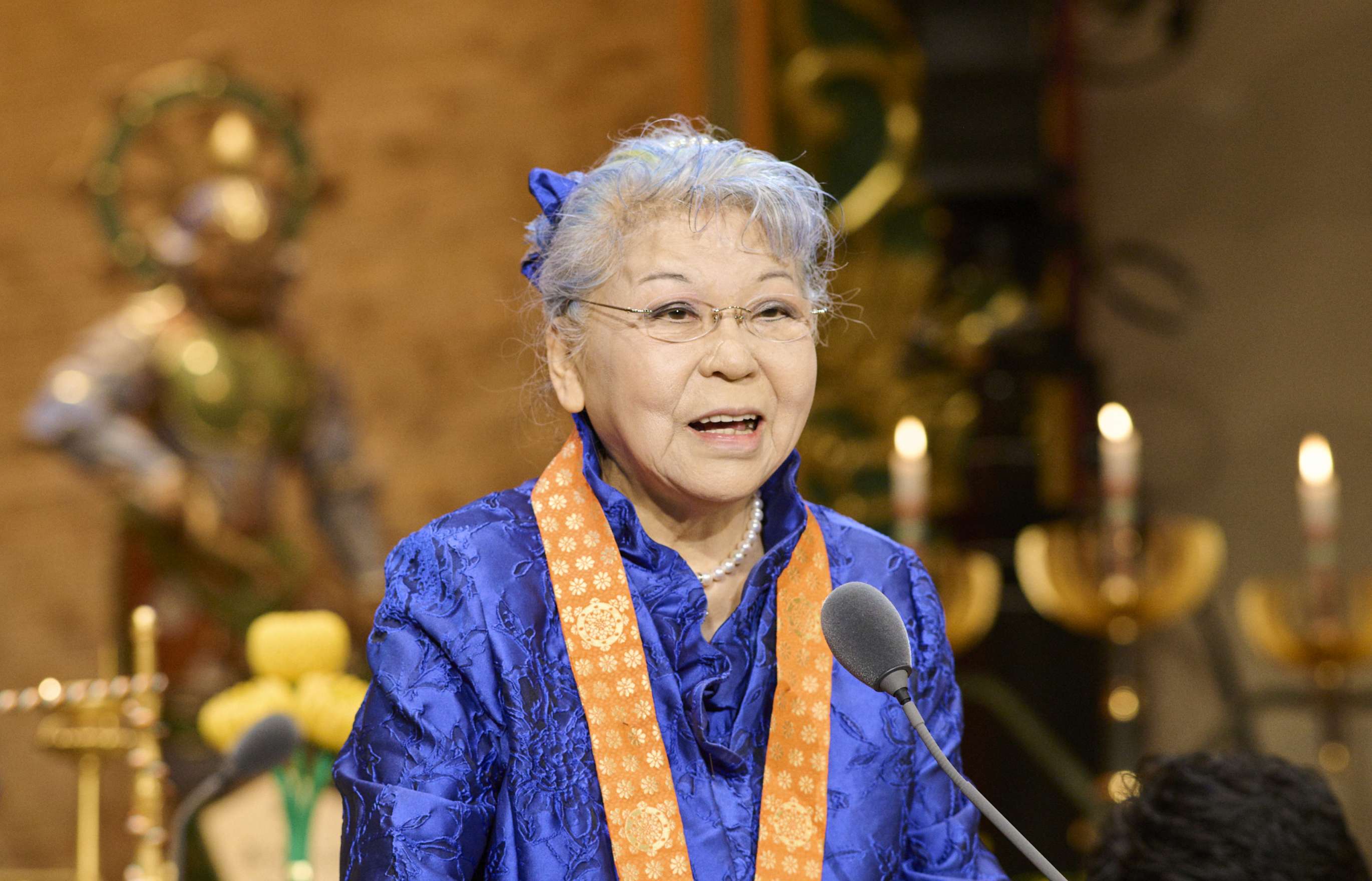
Tachikawa, Japan / Her Holiness addresses the audience that attended the consecration.
On November 8, Her Holiness Shinso Ito conducted a ceremony to mark the completion of the reconstruction of Temple II at Shinnyo-en’s head temple of Oyasono, in Tachikawa, Japan. Members from around the world were on hand to participate in the joyous occasion that marked the completion of a multi-year project. Her Holiness performed a rite to consecrate the images of bodhisattvas and guardian deities housed at the temple, and a rite to dedicate the newly rebuilt temple.
The structure of Temple II was first dedicated by Master Shinjo in 1979, who oversaw the installation and inspiriting of figures of Eleven-Faced Kannon, the bodhisattva of compassion; figures of the Four Celestial Kings, guardians of the four cardinal directions who protect the community of practitioners; and bodhisattva Samantabhadra, who acts to preserve and extend life-spans.
The renovation project, one of many underway in the run-up to the 90th anniversary of the founding of Shinnyo-en next year, is an example of the practice of “enhancement.” Enhancement refers to a typically communal act of beautifying, renovating, or refurbishing sacred spaces to make them truly sublime. Aside from keeping temples and their grounds in good condition structurally, enhancement is meant to ensure that any who visit will be inspired to engage in acts that express their faith in practice.
Her Holiness’ performance of the rite to inspirit and dedicate the renovated space was accompanied by a live choral performance supported by a string ensemble, playing of rare recordings of Master Shinjo chanting prayers of supplication, and a viewing of the figure of bodhisattva Samantabhadra, which is normally kept concealed within its encasement.
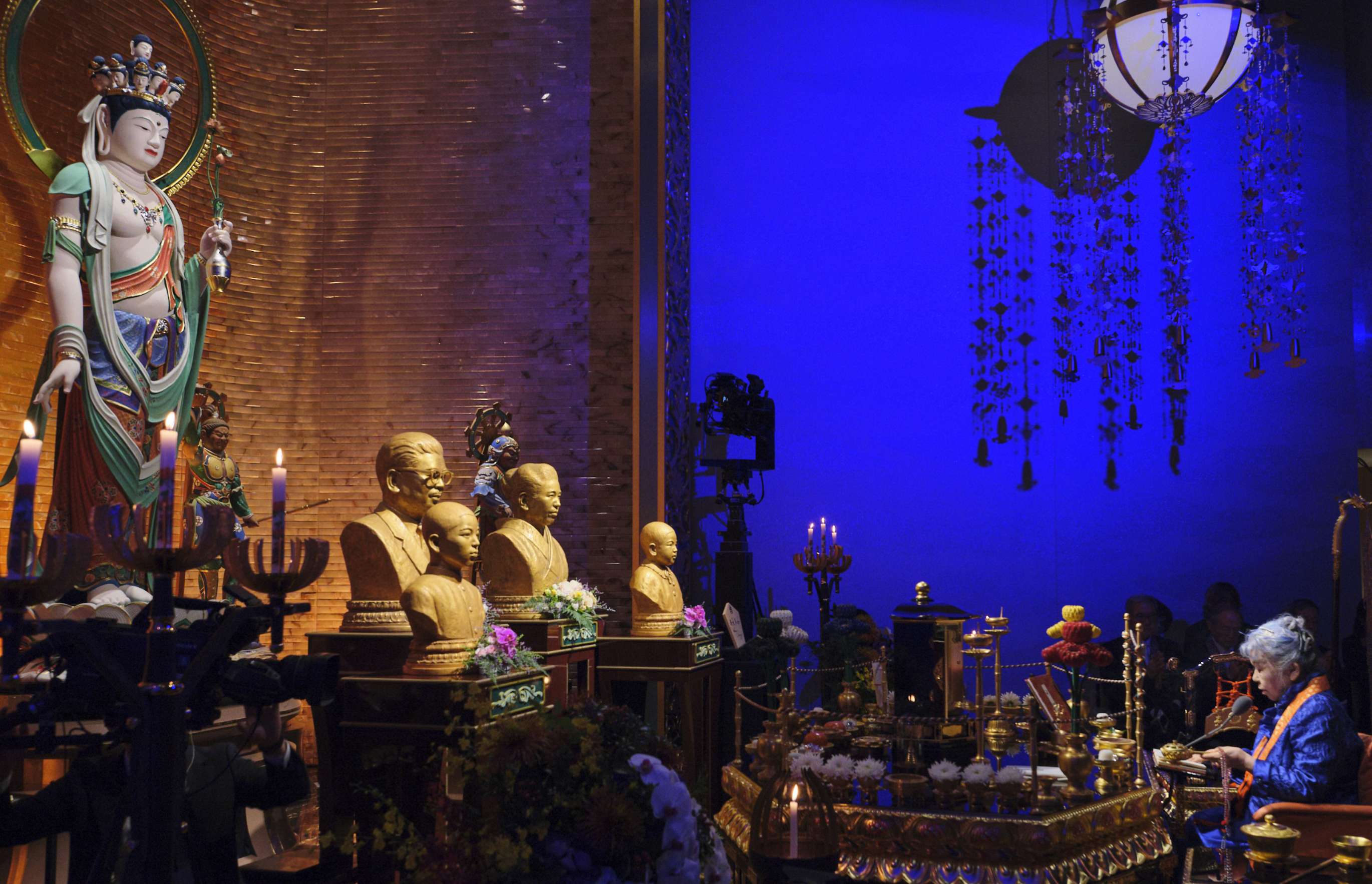
A recording of Master Tomoji speaking at the dedication of the Sesshin Training Hall in 1958, which captures well the purpose for building facilities for the community, was played for those in attendance:
We now have a place to serve as a foundation for our practice. I hope that you will be sure to rise to the occasion for the sake of fellow people and the world, and will do all that you can to truly be there for those who are experiencing difficulties or challenges, and for everyone else, too.
Attendees at the ceremony also heard a recording of Master Shinjo speaking at the dedication of the temple in 1979, in which he shared his vision for the community that would practice in the temple:
Today, the world is faced with a mountain of grave problems that go far beyond the control of any individual. Yet I am convinced that by transcending national borders, ethnicities, and different religious paths, and by putting the teachings of the Buddha into practice in substantive ways rooted in the Dharma lineage, we will surely find a light of hope.
I sincerely pray and vow that our shared efforts will go toward the happiness of all humankind and the realization of peace for all.
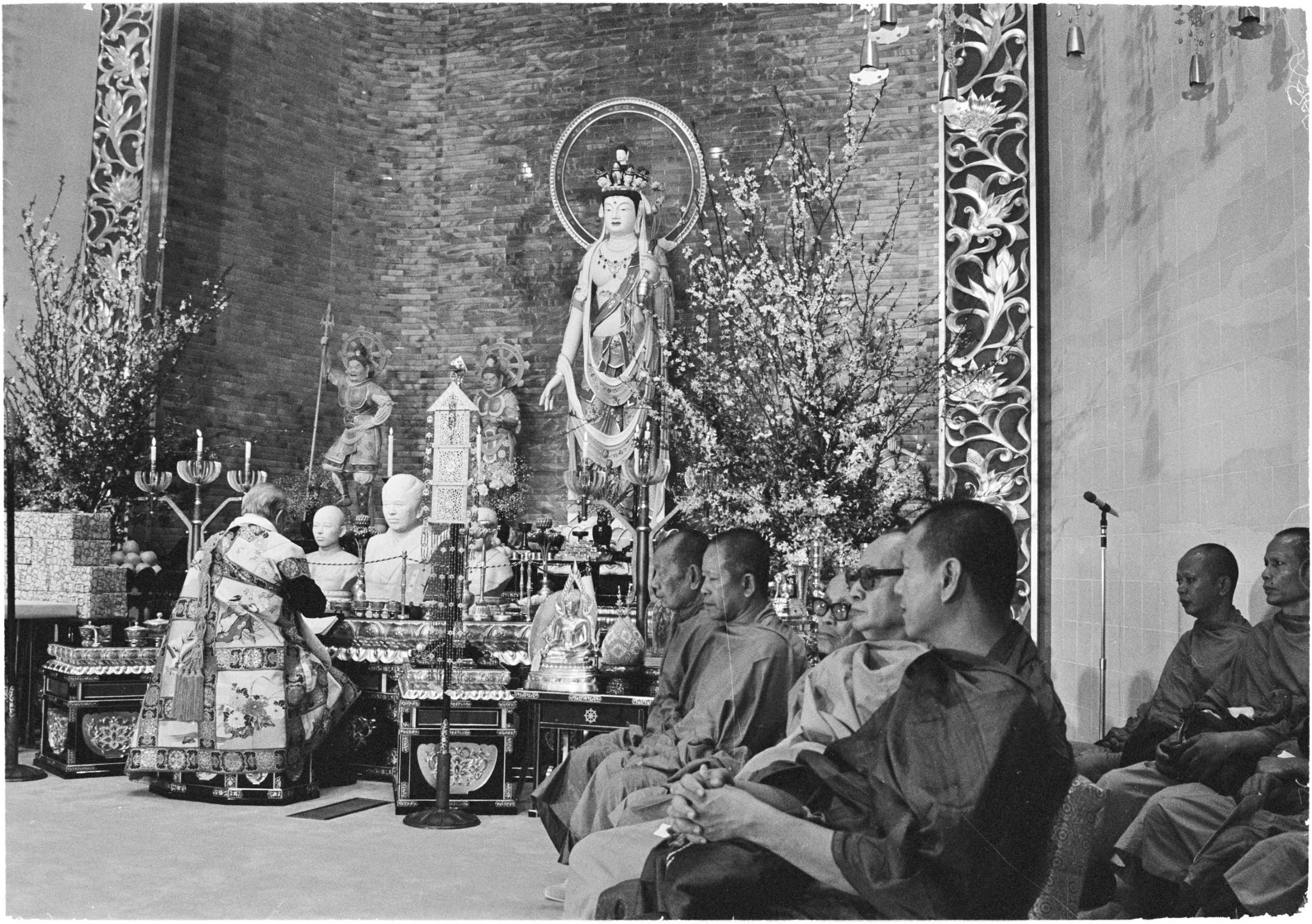
Reflecting on Master Shinjo’s vision of a community that would transcend national borders, ethnicities, and faiths to guide others toward peace and happiness, Her Holiness shared the significance of the temple’s central figure:
The Eleven-Faced Kannon represents the figure of someone appearing wherever help is needed. Their many heads look in all directions to see where they can offer help. This statue was sculpted in line with a vision that Tomoji saw of Kannon reaching out to all people to offer their help.
After sharing with the members gathered from around the world a brief overview of Shinnyo-en’s history of the construction of temples at Oyasono, Her Holiness shared her heartfelt wish for the community to continue with their personal practice and her deepest gratitude for their efforts to restore the temple itself.
Do you see that the big toe of the Kannon’s right foot is slightly raised, as if about to take a step forward? I hope we can all be equally inspired to do the same. When we make an effort to let our buddha nature, our unique nature, shine through, we can open the way to a meaningful life. I hope you will continue your efforts to move forward. Thank you very much for today.
View more news and events
Her Holiness’ inspirational message for 2026
Her Holiness Shinso Ito offers spiritual guidance for the coming Year of the Horse, 2026.
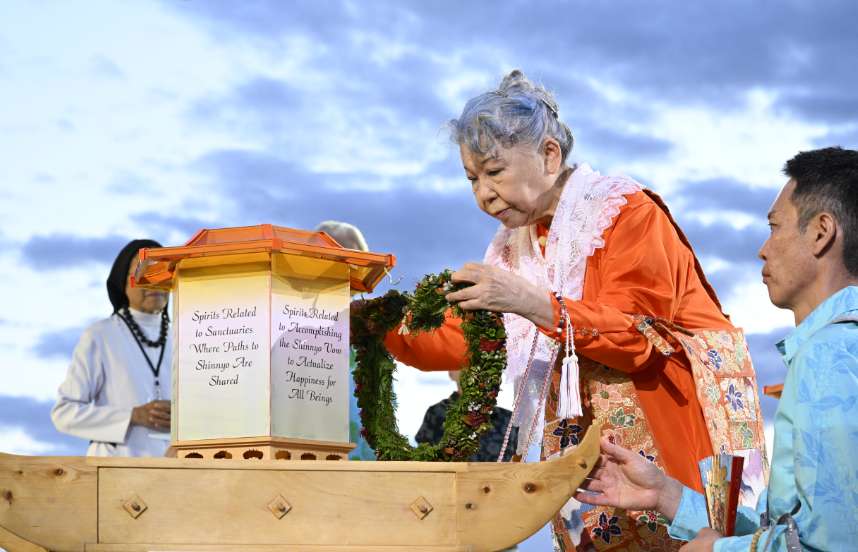
27th annual Shinnyo Lantern Floating Hawaiʻi held in Honolulu
Tens of thousands gather at Ala Moana Beach to participate in the 27th annual Memorial Day event organized by Shinnyo-en.

Shinnyo-en holds global saisho ceremony at its head temple
Her Holiness Shinso Ito conducts a global saisho ceremony at Shinnyo-en’s head temple, Oyasono.
A New Year’s Message from Her Holiness Shinso Ito for 2025
May we be inspired to renew our efforts at sincere acts, with the heartfelt prayer that the coming year brings great joy and happiness to all.

Shinnyo-en holds saisho ceremony at Daigoji on its 1150th anniversary
Her Holiness Shinso Ito conducted a saisho ceremony at the invitation of Daigoji temple to commemorate the 1150th anniversary of its founding.

A Shinnyo perspective on mindful parenting
Shinnyo priest Qalvy Grainzvolt joins fellow Buddhist teachers to integrate dharma practice into the work of parenting.

Shinnyo Lantern Floating Hawaiʻi observes 25th anniversary on Oʻahu
Tens of thousands gathered at Ala Moana Beach to participate in the 25th Anniversary Memorial Day event organized by Shinnyo‑en.
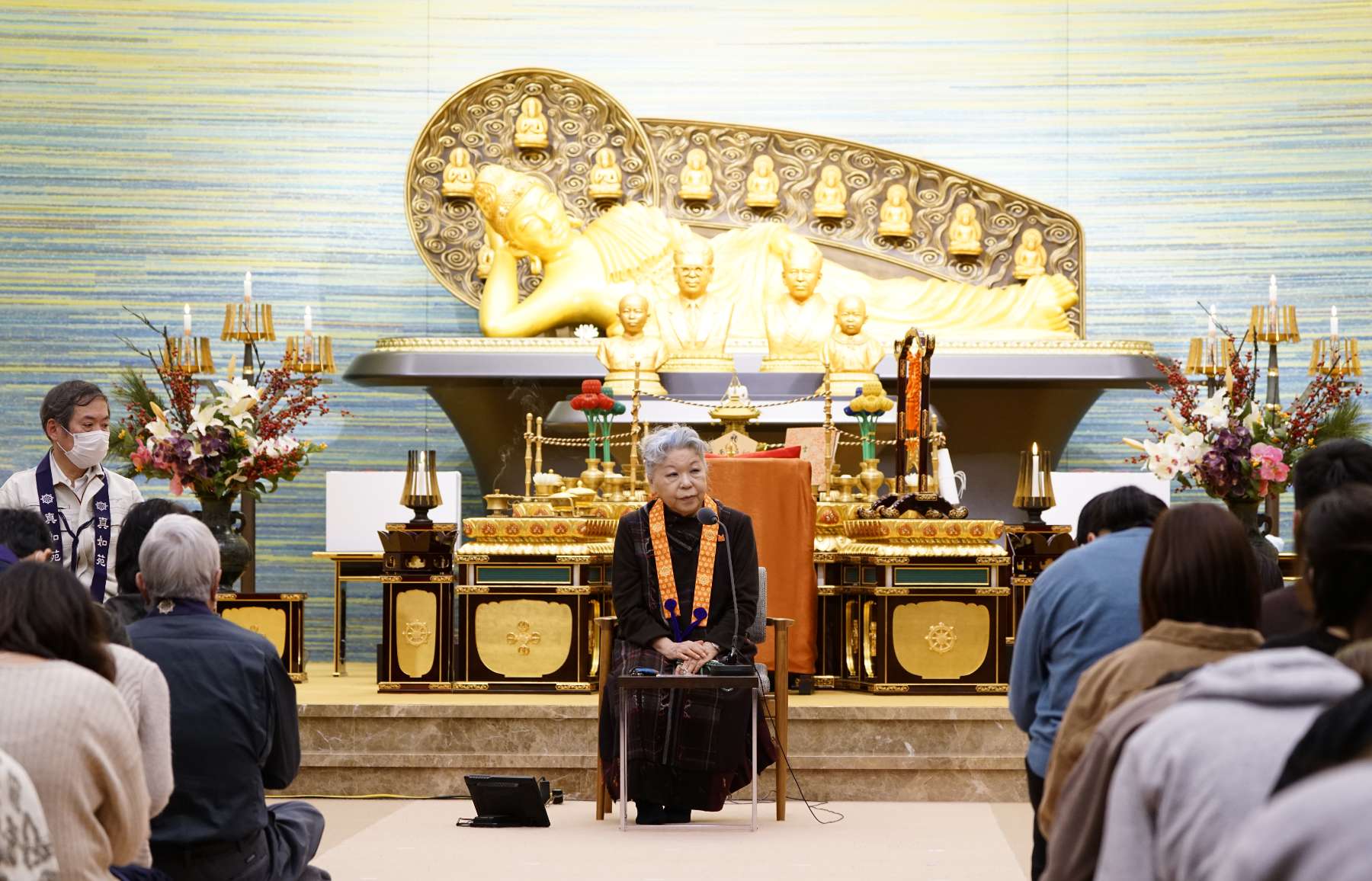
Her Holiness Shinso Ito speaks to the Shinnyo‑en community in earthquake-struck Ishikawa prefecture
Her Holiness Shinso Ito paid a special visit to Hokuriku Head Temple in Kanazawa in Ishikawa Prefecture to offer words of gratitude, admiration, and encouragement to the community following the January 1st earthquake. Her remarks to Shinnyo‑en leaders from regions affected by the earthquake and tsunami are shared below.
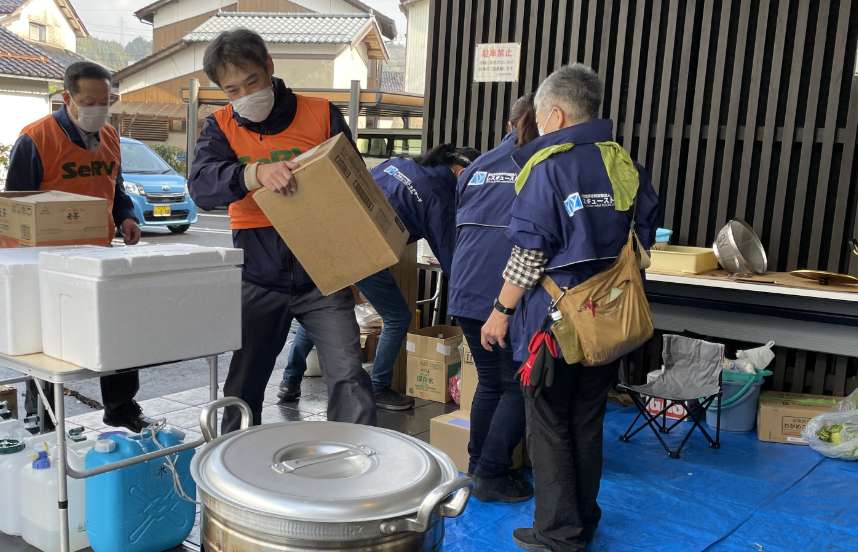
Shinnyo-en contributes to relief efforts for the 2024 Noto Peninsula earthquake
Shinnyo‑en has contributed monetary and volunteer resources in response to the January 1st earthquake that severely damaged buildings and displaced many in Ishikawa Prefecture.
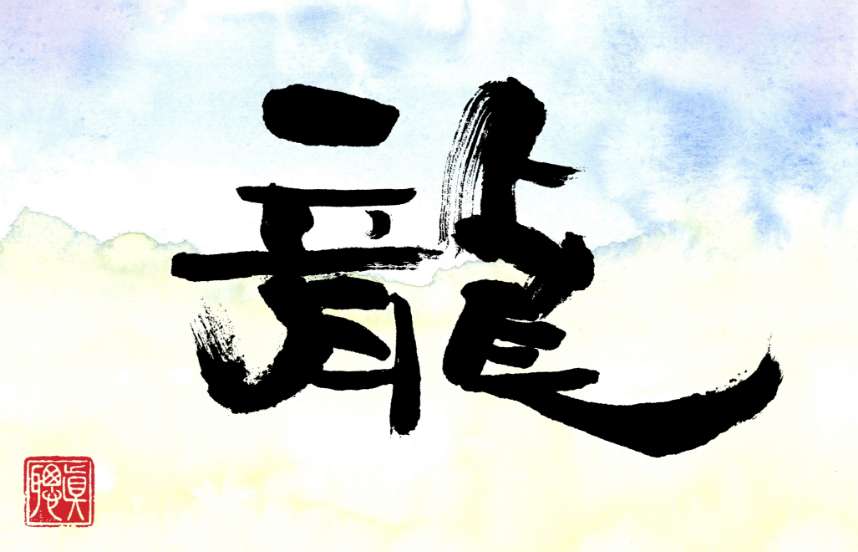
Her Holiness’ inspirational message for 2024
Her Holiness Shinso Ito offers spiritual guidance for the coming Year of the Dragon, 2024
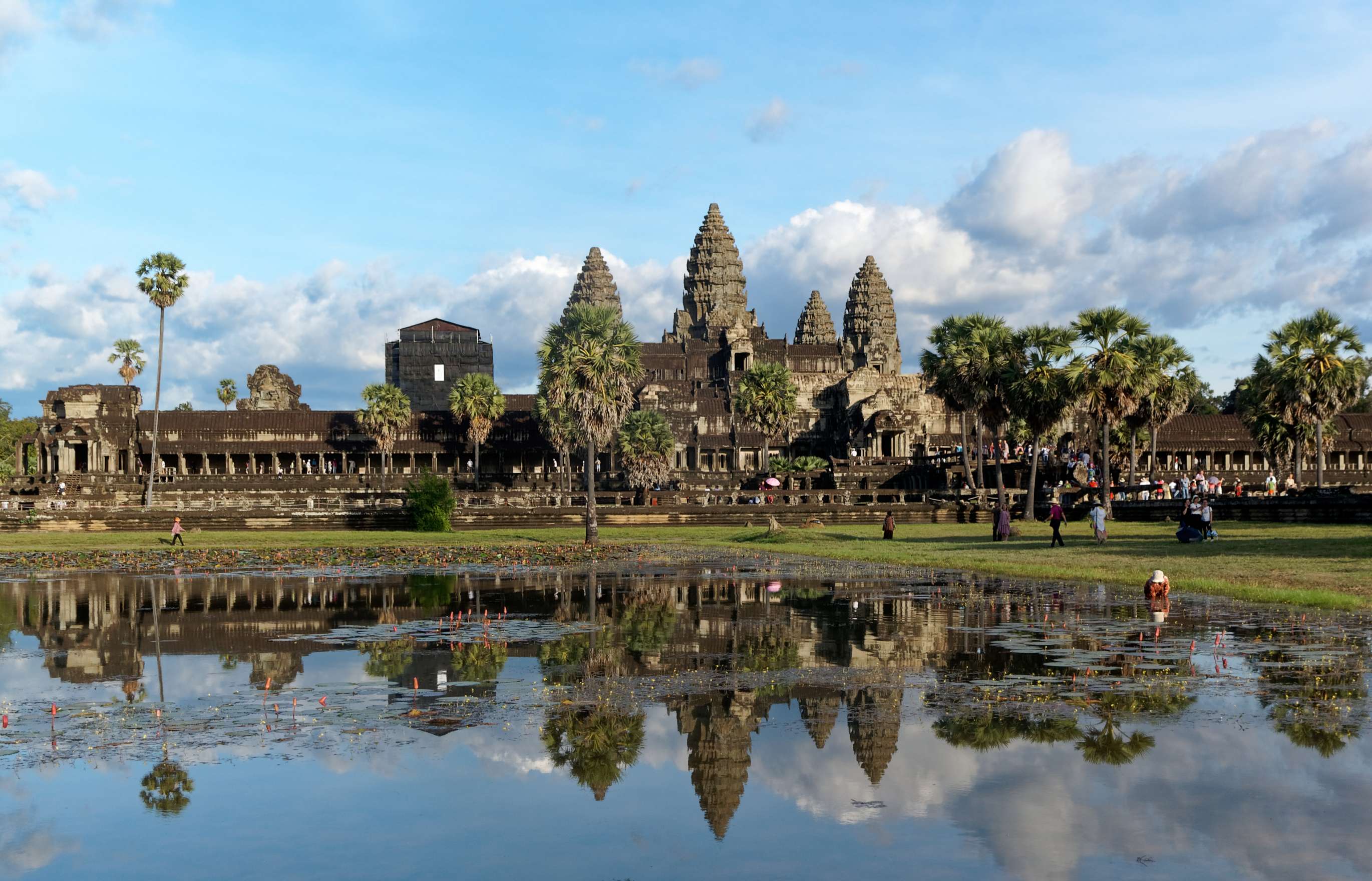
Shinnyo-en contributes to preservation of Angkor Wat, a UNESCO World Heritage Site
Representatives attended ceremonies to mark the completion of a restoration project at Angkor Wat, which Shinnyo‑en has supported since 1996.

Cultivating unwavering regard for others in the face of conflict
Her Holiness encourages the practice of positive regard for others in the face of conflict and urges us to practice it unconditionally.
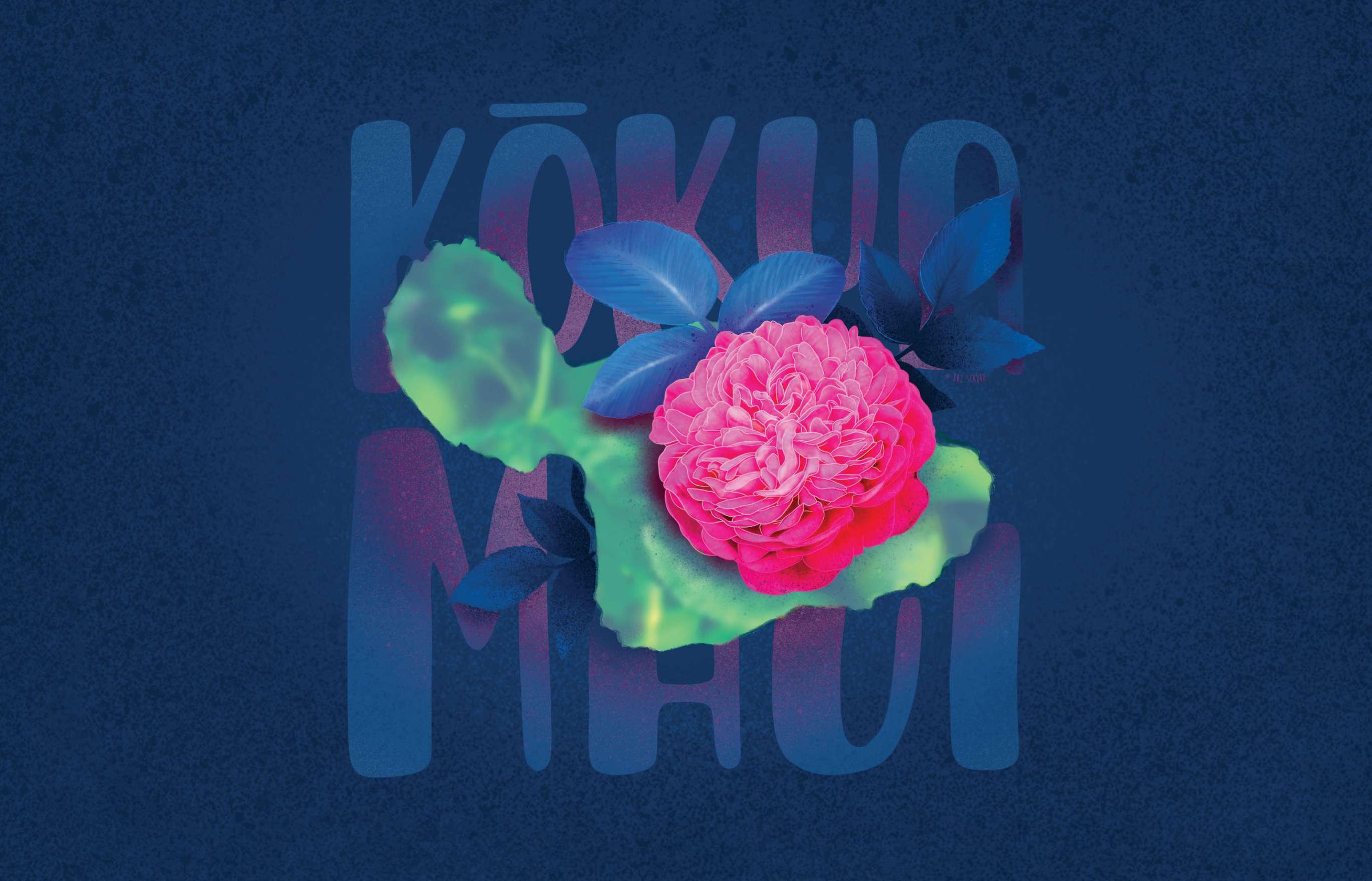
Shinnyo‑en and Nā Lei Aloha Foundation offer donation to Maui United Way
Shinnyo‑en and Nā Lei Aloha Foundation made a donation of US$100,000 to Maui United Way in response to the wildfires that devastated the community of Lahaina.
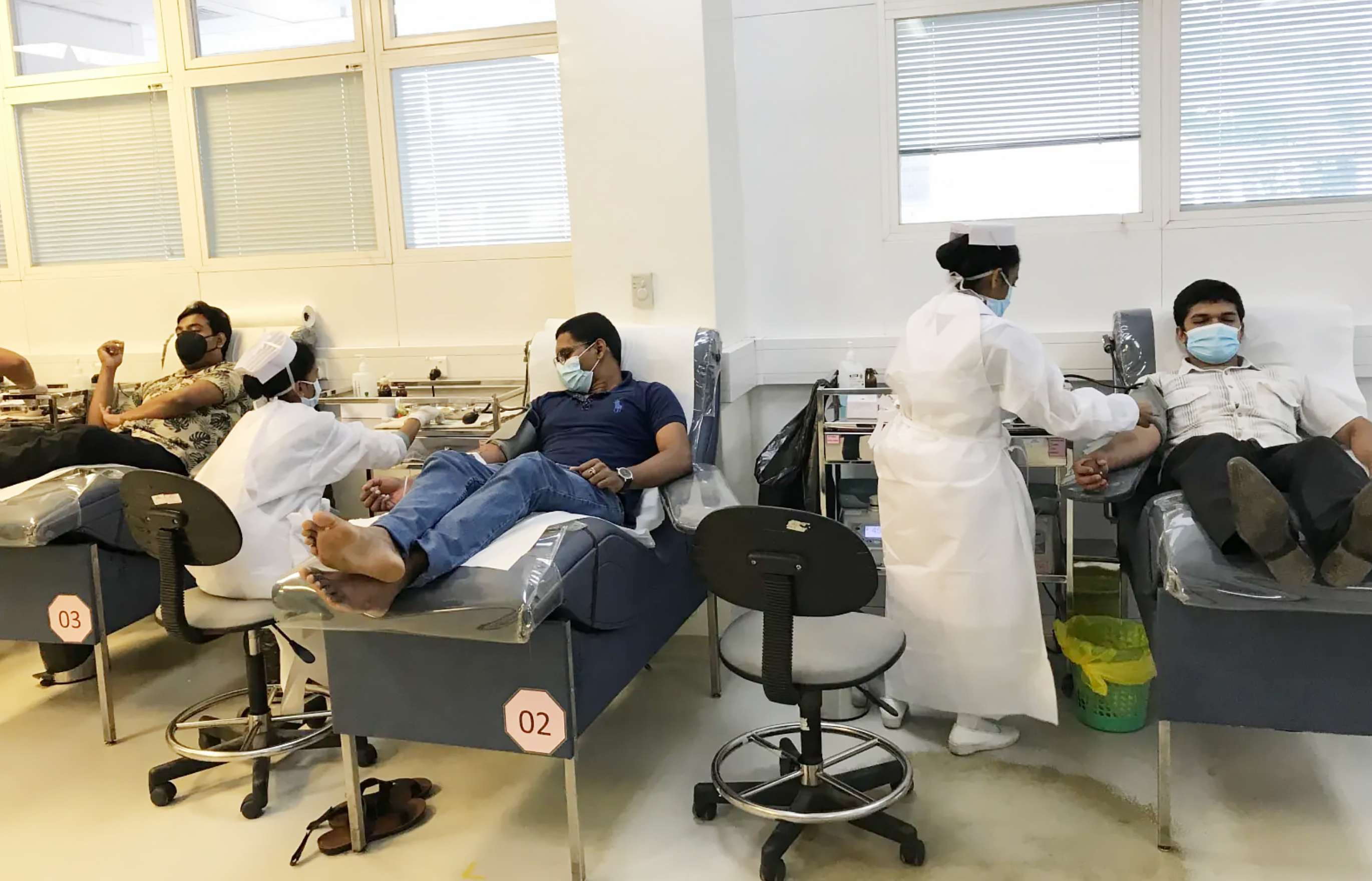
Shinnyo‑en Lanka Preschool hosts 32nd annual blood drive
A Sri Lankan preschool operated by Shinnyo‑en successfully organized their 32nd annual blood donation campaign.
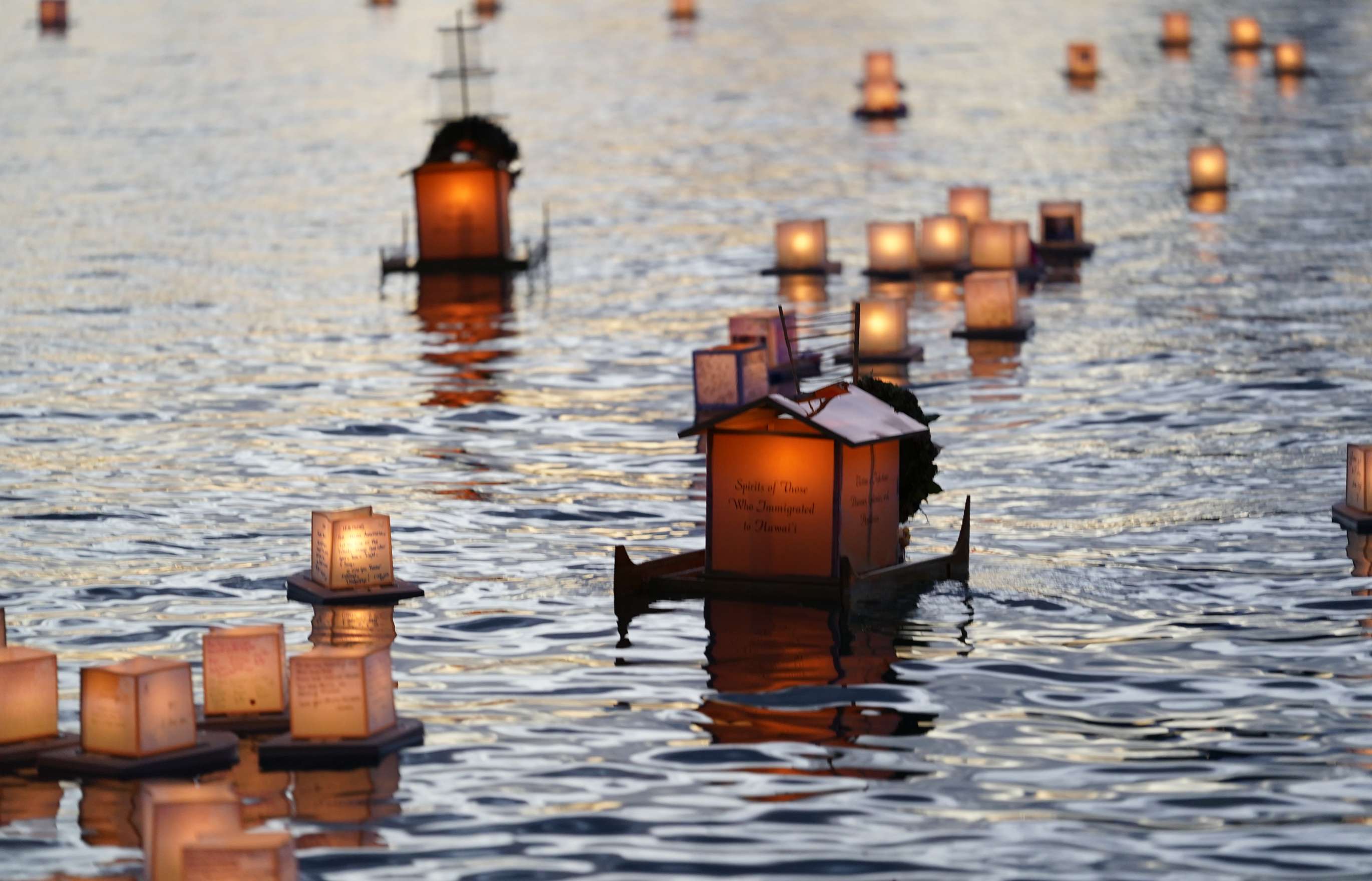
Shinnyo Lantern Floating Hawaiʻi returned to Ala Moana Beach for its 25th year
Tens of thousands gathered at Ala Moana Beach to participate in the 25th annual Memorial Day event organized by Shinnyo‑en.
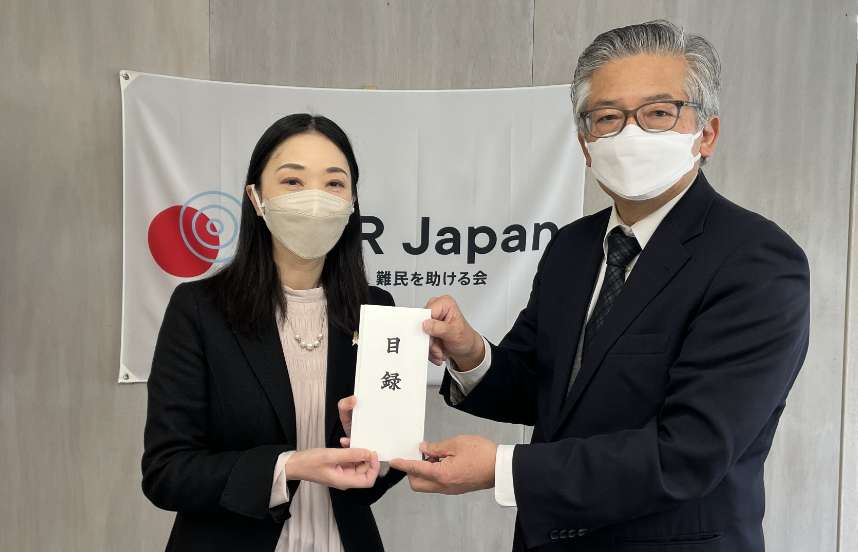
Donation of 20 million yen toward emergency earthquake relief in Turkey
In response to the devastating earthquake that hit Turkey and Syria, the Shinnyo‑en community offers significant monetary donations toward relief efforts.

Shinnyo Lantern Floating Hawai‘i 2022 offers “space to heal”
For a third year, a limited Shinnyo Lantern Floating is held due to COVID pandemic; Her Holiness addresses attendees live from Tokyo.
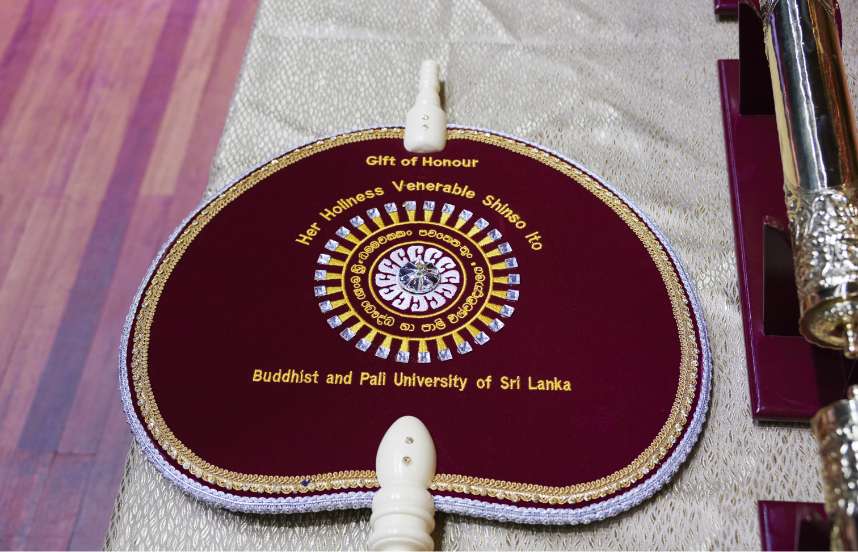
Prestigious Sri Lankan university awards honorary doctorate to Her Holiness
Buddhist and Pali University of Sri Lanka recognizes Her Holiness’ lifelong commitment to educating underserved children with honorary PhD.
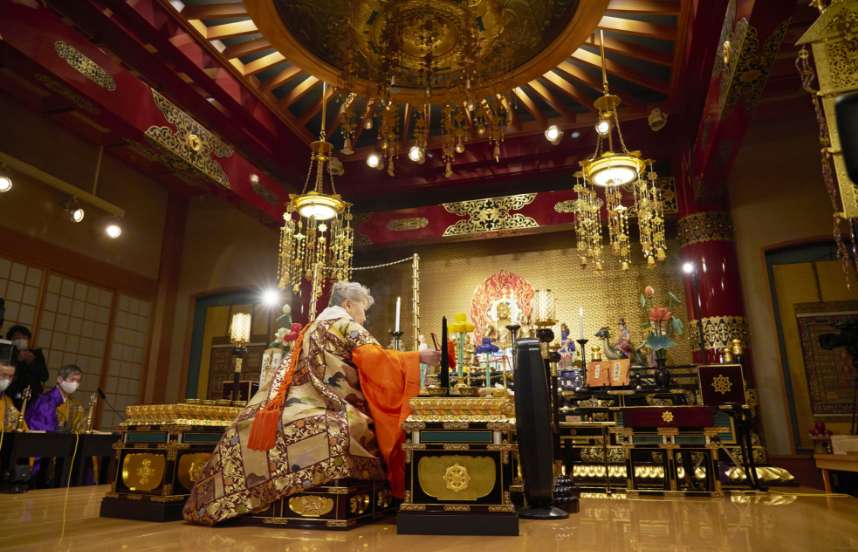
Her Holiness Shinso Ito conducts rites for peace in Ukraine crisis
Her Holiness publicly states her wish that the conflict in Ukraine will swiftly end and Shinnyo‑en makes a substantial offering for humanitarian aid.
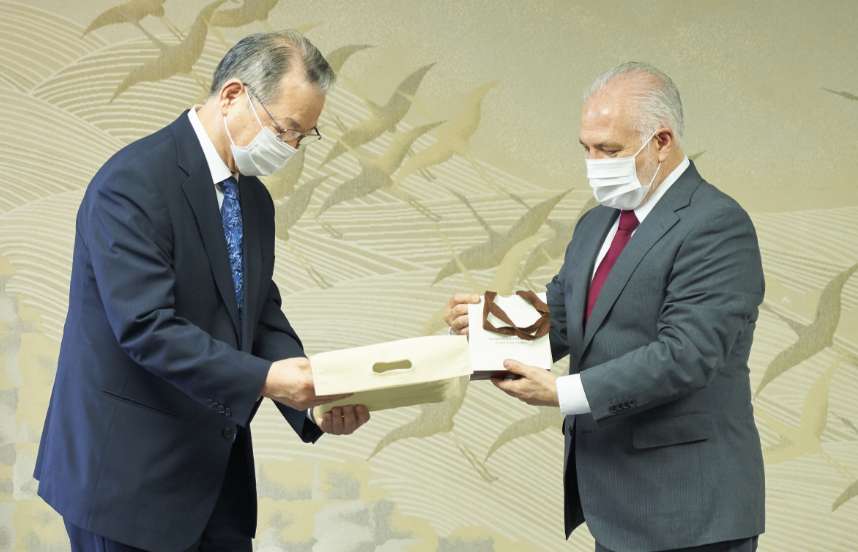
Shinnyo‑en joins global COVID-19 response
Shinnyo‑en has made substantial donations to the UN, to Ecuador, and to community service programs in Hawaii in response to the COVID outbreak.
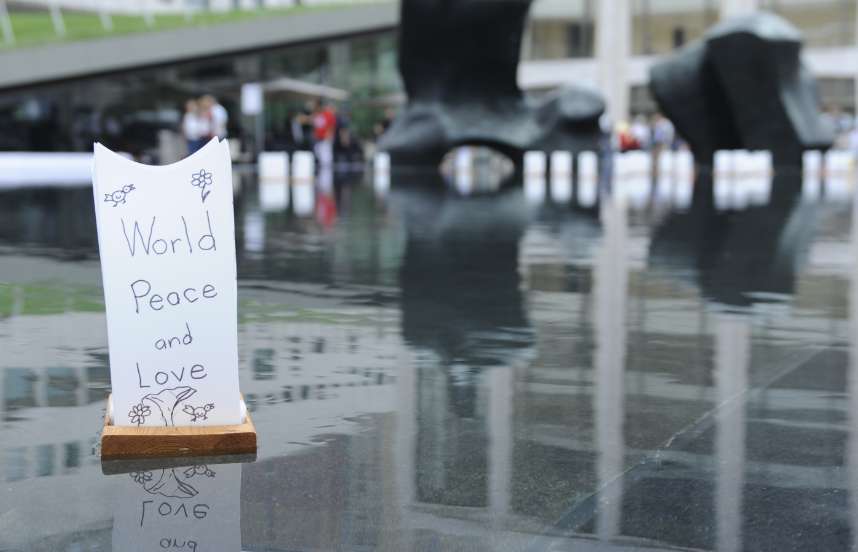
Our human challenge
In the wake of protests following the murder of George Floyd, Shinnyo‑en issues a statement regarding racism and the harm it brings to society.
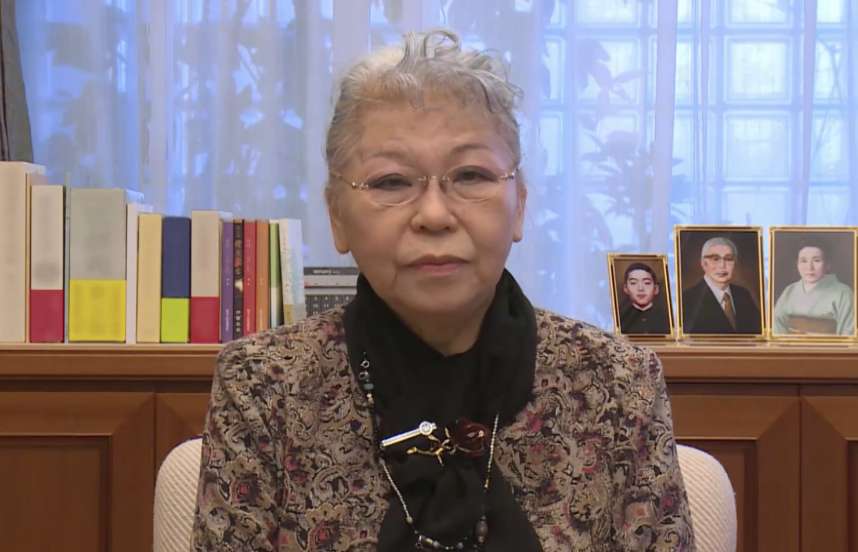
Head of Shinnyo-en shares message in response to novel coronavirus outbreak
Her Holiness Shinso Ito offers words of encouragement and advice for spiritual practice in response to the Coronavirus outbreak.
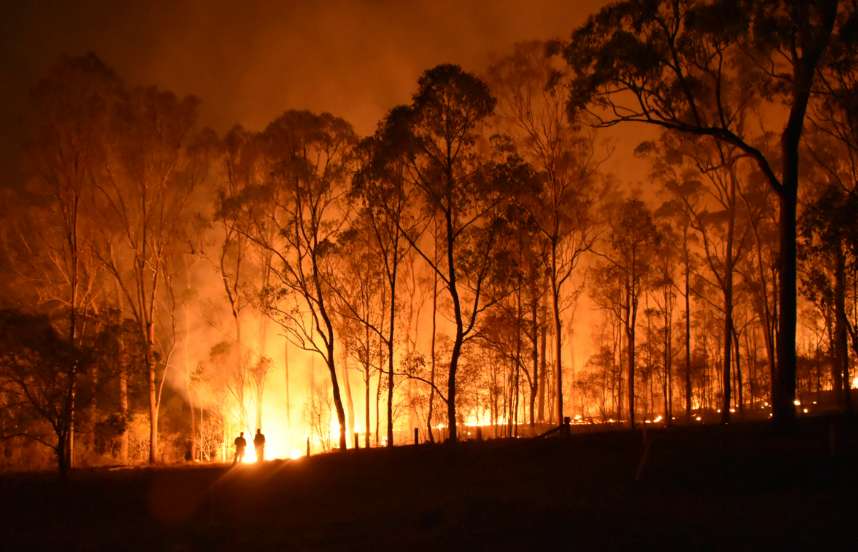
Shinnyo‑en offers donations to Australian bushfire relief efforts
Shinnyo‑en has joined other international organizations to offer funds to agencies responding to continent-wide bushfires.
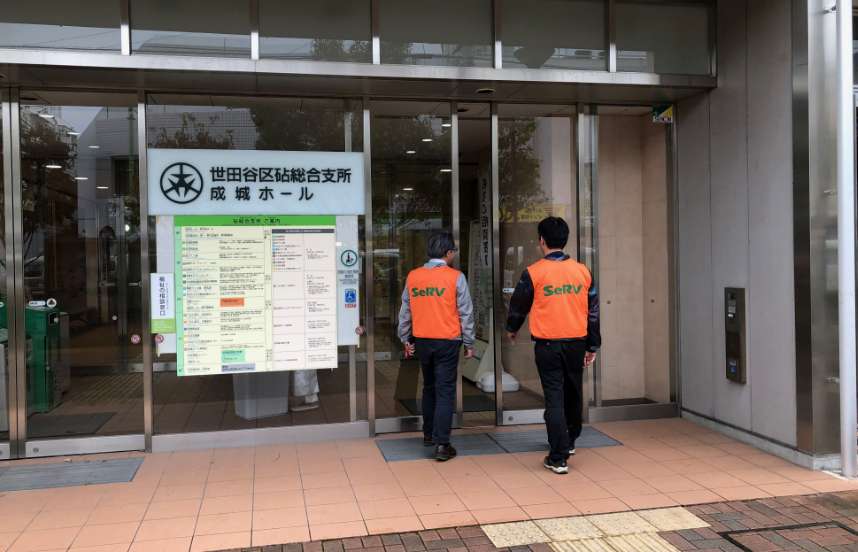
Shinnyo‑en supports recovery efforts after Typhoon Hagibis
Shinnyo‑en joins efforts following the largest and strongest typhoon in the history of meteorological records in the country.
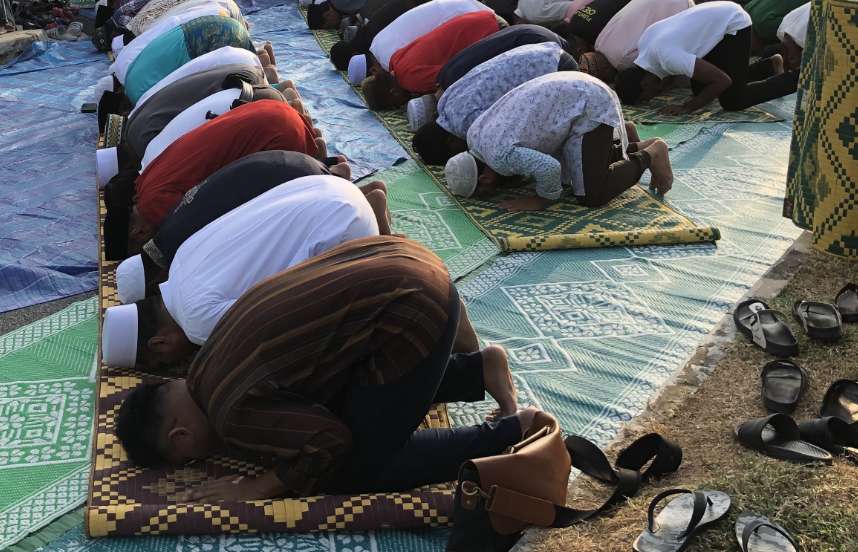
Volunteers in Singapore help Muslim neighbors during prayer gathering
Members of Shinnyo‑en Singapore helped their neighbors, a Muslim mosque, manage traffic during a busy Eid celebration.